-
Posted on: 07 Jan 2026
-
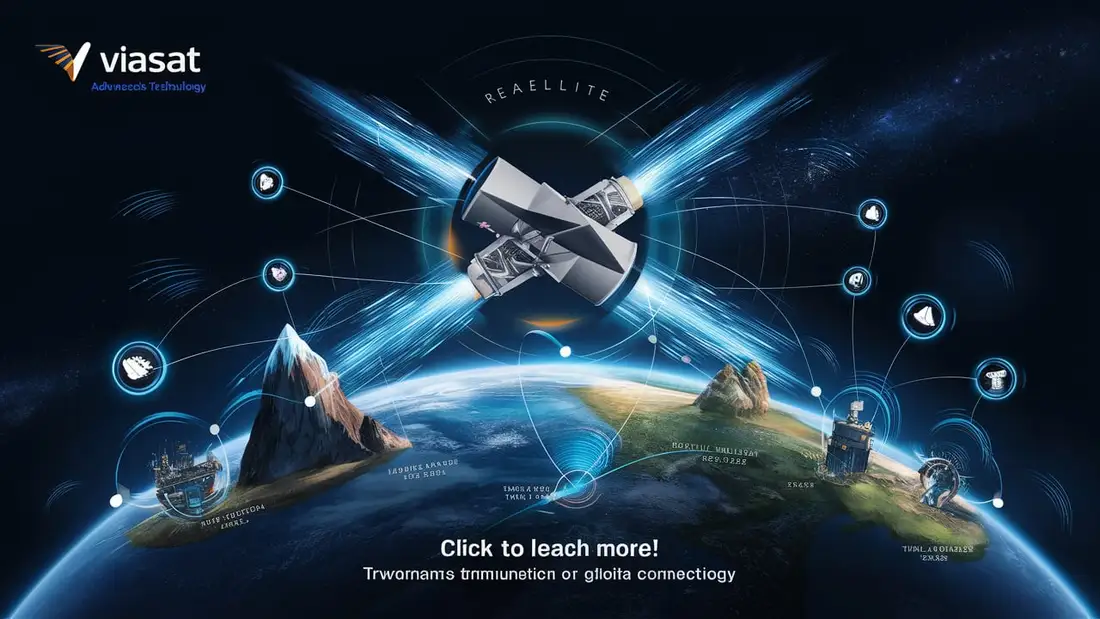
Viasat satellite internet is transforming digital access, offering high-speed, reliable connections to underserved areas. This revolutionary technology breaks down geographical barriers, empowering communities and businesses with the connectivity essential for modern life. Discover how Viasat is redefining the internet landscape.
What is Viasat Satellite Internet?
Viasat satellite internet is a high-speed broadband service delivered via advanced satellite technology. Unlike traditional terrestrial internet services that rely on physical cables, Viasat utilizes a network of sophisticated satellites orbiting the Earth to transmit data. This innovative approach allows Viasat to provide internet access to locations where traditional broadband infrastructure is unavailable or prohibitively expensive to deploy, such as rural areas, remote communities, and even ships at sea. By leveraging cutting-edge technology, Viasat aims to bridge the digital divide, offering speeds and reliability that rival or even surpass many wired connections, thereby revolutionizing connectivity for millions worldwide.
The Evolution of Satellite Internet
Satellite internet has come a long way from its early days. Initially, satellite internet was characterized by high latency, slow speeds, and often restrictive data caps, making it a last resort for connectivity. The first generation of satellite internet relied on geostationary satellites (GEO) positioned approximately 22,000 miles above the Earth. While these satellites offered broad coverage, the immense distance resulted in significant signal delay, or latency, which hampered real-time applications like video conferencing and online gaming. Data speeds were often measured in kilobits per second, a far cry from today's broadband standards.
The advent of newer satellite technologies, including Medium Earth Orbit (MEO) and Low Earth Orbit (LEO) constellations, marked a significant leap forward. LEO satellites, for instance, orbit much closer to Earth (a few hundred to a couple of thousand miles), drastically reducing latency. This closer proximity allows for faster data transmission and a more responsive internet experience. Viasat has been at the forefront of this evolution, developing and deploying its own high-capacity satellites, such as the ViaSat-1, ViaSat-2, and the upcoming ViaSat-3 constellation. These satellites are designed with advanced beamforming technology and increased bandwidth, enabling them to serve more users with higher speeds and greater capacity than previous generations. This technological progression has transformed satellite internet from a niche solution into a viable and often superior alternative for broadband access, especially in areas underserved by terrestrial networks.
How Viasat Works: The Technology Behind the Speed
Understanding how Viasat satellite internet delivers its service involves appreciating the interplay of several key technological components. At its core, Viasat uses a network of high-capacity satellites to relay internet signals between users and the internet backbone. This process can be broken down into several stages:
- User Equipment: The process begins at the subscriber's location with a satellite dish (or terminal) and a modem. The dish, typically installed on the roof or a clear vantage point, is precisely aimed at the Viasat satellite.
- Signal Transmission to Satellite: When a user requests data (e.g., loads a webpage), their modem sends this request as a radio signal up to the Viasat satellite. This signal travels through the atmosphere.
- Satellite Relay: The Viasat satellite, acting as a relay station in space, receives the signal. Modern Viasat satellites are equipped with powerful transponders and advanced antenna technology, capable of handling vast amounts of data and directing signals with remarkable precision. The ViaSat-3 constellation, for example, is designed to offer terabits per second of capacity.
- Transmission to Ground Station: The satellite then transmits the signal down to a Viasat ground station, also known as a teleport. These ground stations are strategically located and are connected to the global internet backbone via high-speed fiber optic lines.
- Accessing the Internet: At the ground station, the request is processed and routed to the appropriate server on the internet. The data is then retrieved.
- Return Path: The retrieved data travels back from the internet server to the Viasat ground station.
- Transmission Back to Satellite: The ground station then transmits the data signal back up to the Viasat satellite.
- Delivery to User: Finally, the satellite beams the data down to the user's satellite dish, which passes it to the modem. The modem decodes the signal, and the requested information appears on the user's device.
Key technologies that enable Viasat's performance include:
- High-Capacity Satellites: Viasat's proprietary satellites are designed for massive data throughput. The ViaSat-3 constellation, for instance, is a tri-band system designed to deliver unprecedented capacity and coverage, with each satellite capable of over 1 Terabit per second (Tbps) of throughput. This is a significant advancement over previous satellite generations.
- Advanced Beamforming: Viasat employs sophisticated beamforming technology. This allows the satellite to create numerous small, focused beams of bandwidth that can be dynamically allocated to areas with high demand. This is far more efficient than older satellites that broadcast a single, wide beam, leading to better performance for individual users.
- Ka-Band Spectrum: Viasat primarily operates in the Ka-band frequency spectrum. This band offers wider channels than older L-band or Ku-band systems, allowing for higher data rates.
- Ground Infrastructure: A robust network of ground stations ensures efficient connection to the internet backbone and facilitates the rapid processing of data.
The combination of these elements allows Viasat to offer speeds that are competitive with many cable and DSL providers, significantly reducing latency compared to older satellite technologies, and providing a more consistent and reliable connection.
Viasat's Game-Changing Advantages
Viasat satellite internet distinguishes itself from traditional internet services and earlier satellite technologies through a suite of compelling advantages. These benefits directly address the limitations faced by many users, particularly those in rural and remote locations, and are instrumental in its role as a game-changer in the connectivity landscape.
Unparalleled Reach: Connecting the Unconnected
Perhaps Viasat's most significant advantage is its ability to provide high-speed internet access virtually anywhere. Traditional broadband infrastructure, such as fiber optic cables or coaxial networks, is expensive and challenging to deploy in sparsely populated or geographically difficult terrains. This leaves millions without reliable internet access. Viasat's satellite technology bypasses the need for extensive ground infrastructure. As long as there is a clear view of the sky, Viasat can deliver broadband. This unparalleled reach extends to:
- Rural Households: Enabling families to access online education, telehealth services, and entertainment.
- Remote Businesses: Allowing small businesses in isolated areas to participate in the digital economy, manage operations online, and connect with customers.
- Transportation: Providing connectivity for commercial aviation, maritime vessels, and even public transit, enhancing passenger experience and operational efficiency.
- Government and Defense: Supporting critical communication needs in remote operational environments.
In 2025-26, an estimated 15-20% of the global population still lacks basic broadband access, with a significant portion of this being in rural or remote areas. Viasat's technology is specifically designed to target these underserved markets, making it a crucial tool for digital inclusion.
Speed and Performance: A New Benchmark
Viasat has significantly raised the bar for satellite internet speeds. While older satellite services were often slow and frustrating, Viasat's advanced satellites and network architecture deliver speeds that can rival or even exceed those offered by DSL and some cable providers. Current Viasat plans (as of 2025-26) often offer download speeds ranging from 25 Mbps to over 100 Mbps, with upload speeds typically between 3 Mbps and 5 Mbps. This performance is achieved through:
- High-Throughput Satellites (HTS): Viasat's HTS, like ViaSat-1, ViaSat-2, and the upcoming ViaSat-3, have significantly more bandwidth than previous generations.
- Spot Beam Technology: The ability to focus bandwidth into small, high-capacity beams allows for more efficient use of spectrum and higher speeds for users within those beams.
- Reduced Latency: While satellite internet inherently has higher latency than fiber, Viasat has worked to minimize this. While still higher than terrestrial options, it's often low enough for many common online activities, including video streaming and VoIP calls.
For many users, this means they can now enjoy smooth video streaming in HD, participate in video conferences without significant lag, download large files, and engage in online activities that were previously impossible with older satellite technologies. The average download speed for Viasat plans in 2025 is around 50-75 Mbps, a stark contrast to the sub-10 Mbps speeds common a decade ago.
Reliability in Challenging Environments
One of the critical challenges for internet connectivity is reliability, especially in areas prone to extreme weather or where infrastructure is prone to damage. Viasat's satellite-based system offers a unique advantage in this regard. Because the service relies on a connection to a satellite in orbit, it is largely immune to ground-based disruptions such as:
- Power Outages: While the user's modem and router require power, the core internet delivery system is not affected by local power grid failures.
- Physical Infrastructure Damage: Unlike cable or fiber lines that can be cut by construction, fallen trees, or natural disasters, the satellite link is not susceptible to such physical damage.
- Weather Interference: While severe weather (heavy rain, snow) can sometimes cause temporary signal degradation (rain fade), Viasat's technology is designed to mitigate this. Advanced error correction and adaptive modulation techniques help maintain a stable connection even in adverse conditions.
This resilience makes Viasat an invaluable service for emergency responders, critical infrastructure operators, and communities in disaster-prone regions. For instance, in the aftermath of hurricanes or wildfires in 2025, Viasat terminals have been deployed to provide essential communication links when terrestrial networks are down.
Security Features
In an era of increasing cybersecurity threats, Viasat prioritizes the security of its network and user data. While specific security protocols can vary by plan and application, Viasat generally employs robust security measures:
- Encryption: Data transmitted between the user's equipment and the satellite is typically encrypted, protecting it from unauthorized interception.
- Network Security: Viasat's ground stations and network infrastructure are protected by advanced firewalls and intrusion detection systems.
- Secure Authentication: Ensuring that only authorized users can access the network.
For enterprise and government clients, Viasat offers even more advanced security solutions, including dedicated private networks and specialized encryption services, making it a trusted provider for sensitive applications.
Viasat vs. Traditional Internet: A Comparative Analysis
The decision to choose an internet service provider often comes down to comparing the available options. Viasat satellite internet offers a unique value proposition, especially when contrasted with traditional terrestrial broadband services like DSL, cable, and fiber optics. Understanding these differences is crucial for consumers and businesses to make an informed choice that best suits their needs.
Comparison Table: Viasat vs. DSL, Cable, and Fiber
The following table provides a high-level comparison of Viasat satellite internet against common terrestrial broadband technologies, considering key factors relevant to users in 2025-26:
Feature Viasat Satellite Internet DSL (Digital Subscriber Line) Cable Internet Fiber Optic Internet Availability Nearly universal (requires clear sky view) Limited by proximity to telephone lines Limited by cable infrastructure deployment Limited by fiber optic network deployment Typical Download Speeds (2025-26) 25 Mbps - 100+ Mbps 5 Mbps - 100 Mbps 50 Mbps - 1 Gbps+ 100 Mbps - 10 Gbps+ Typical Upload Speeds (2025-26) 3 Mbps - 5 Mbps 1 Mbps - 10 Mbps 10 Mbps - 50 Mbps 100 Mbps - 10 Gbps+ Latency (Ping) 500-700 ms (improved but still higher) 20-80 ms 10-30 ms 5-20 ms Reliability High (immune to ground issues), but susceptible to severe weather (rain fade) Moderate (can be affected by line quality and distance) Moderate to High (can be affected by network congestion) Very High (least susceptible to congestion) Data Caps Often present, though higher tiers offer more data Less common, but possible Increasingly common, often with overage charges Rare for residential plans, more common for business Installation Complexity Requires professional installation of dish Often self-installable or simple professional install Often self-installable or simple professional install Requires professional installation Who Benefits Most from Viasat?
Viasat satellite internet is particularly advantageous for specific user groups:
- Residents of Rural and Remote Areas: Where terrestrial broadband is unavailable or offers very low speeds, Viasat provides a viable, high-speed alternative. This includes farms, ranches, and remote homesteads.
- Mobile Users: Viasat's technology is adapted for use on airplanes, ships, and trains, offering connectivity in transit where traditional options are impossible.
- Businesses Needing Ubiquitous Connectivity: Companies with operations in multiple locations, including remote sites, can rely on Viasat for consistent service.
- Individuals Requiring Reliable Backup: For those in areas prone to terrestrial infrastructure failures, Viasat can serve as a robust backup internet connection.
- Users Seeking Higher Speeds Than DSL: In areas where only DSL is available, Viasat can offer significantly faster download speeds, improving the online experience for streaming, browsing, and general internet use.
While fiber optics offer superior speed and lower latency, their limited availability means Viasat often fills a critical gap. Cable internet provides a good balance of speed and availability in many suburban and urban areas, but Viasat excels where these networks don't reach. DSL, while widely available, often struggles to meet the demands of modern internet usage, making Viasat a compelling upgrade.
Real-World Impact and Case Studies (2025-26)
The impact of Viasat satellite internet is most profoundly seen in the tangible improvements it brings to individuals, businesses, and communities. As of 2025-26, numerous real-world examples illustrate how Viasat is not just providing internet, but actively transforming lives and economies.
Rural Businesses Thriving
Small businesses in rural America have long struggled with the digital divide. Limited internet speeds hinder their ability to compete, manage inventory, process online orders, and engage with customers effectively. Viasat has been a critical enabler for these enterprises. For instance, a family-owned agricultural supply store in rural Montana, previously reliant on a slow DSL connection, upgraded to Viasat in late 2024. By early 2025, they reported a 40% increase in online sales due to faster website loading times and the ability to host live product demonstrations. They also implemented cloud-based inventory management systems, significantly reducing errors and improving efficiency. This story is replicated across various sectors, from artisanal craft producers to remote service providers, all leveraging Viasat for enhanced operational capabilities and market reach.
Educational Opportunities Expanded
The shift towards online learning and digital resources has been accelerated, but it remains a challenge for students in areas with poor internet. Viasat has been instrumental in bridging this gap. In the Appalachian region, where broadband is scarce, school districts have partnered with Viasat to provide hotspots and subsidized plans for students. By the 2025-26 academic year, reports indicate that over 90% of students in these districts now have reliable home internet access, enabling them to participate in virtual classrooms, access digital textbooks, and complete online assignments without interruption. This has led to improved academic performance and reduced the digital homework gap. Universities are also utilizing Viasat for remote campuses or field research stations, ensuring students and faculty have access to essential academic resources regardless of location.
Remote Work Revolutionized
The global trend of remote work has made reliable internet a necessity, not a luxury. For individuals living in areas previously deemed "too remote" for effective remote employment, Viasat has opened new doors. A software developer living in a remote cabin in the Pacific Northwest, who previously couldn't reliably participate in video calls or access large code repositories, switched to Viasat in 2025. They now report seamless participation in team meetings, rapid code downloads, and the ability to work for a major tech company without relocating. This trend is not limited to tech workers; it extends to customer service representatives, graphic designers, and many other professionals whose work can be done online. Viasat's high-speed plans are enabling a more distributed workforce, revitalizing rural economies by allowing residents to earn urban salaries without leaving their communities.
Public Safety Enhanced
In emergency situations, reliable communication is paramount. Viasat's resilience to ground-based infrastructure failures makes it an indispensable tool for public safety agencies. During natural disasters in 2025, such as wildfires in California and flooding in the Midwest, Viasat terminals were rapidly deployed to command centers, temporary shelters, and first responder staging areas. These terminals provided critical internet connectivity for:
- Real-time situational awareness: Accessing maps, weather data, and incident reports.
- Coordination and communication: Enabling voice and video communication between agencies.
- Data transmission: Uploading vital information, such as drone footage or damage assessments.
- Supporting displaced populations: Providing Wi-Fi hotspots in emergency shelters for communication and access to resources.
The U.S. Forest Service, for example, has expanded its reliance on Viasat for its remote fire lookout towers and incident command posts, ensuring communication remains active even when terrestrial networks are compromised.
The Future of Viasat and Satellite Connectivity
The landscape of satellite internet is rapidly evolving, and Viasat is at the forefront of this transformation. With ongoing technological advancements and strategic expansions, the future promises even more robust, faster, and more accessible connectivity solutions. The innovations Viasat is pursuing are set to redefine the boundaries of what satellite internet can achieve.
Next-Generation Satellites
Viasat's commitment to pushing the envelope is most evident in its development of next-generation satellite constellations. The ViaSat-3 constellation represents a significant leap forward. Designed as a global constellation of three ultra-high-capacity satellites, each capable of terabits per second (Tbps) of throughput, ViaSat-3 aims to provide high-speed broadband services across the Americas, Europe, the Middle East, Africa, and the Asia-Pacific region. These satellites utilize advanced technologies such as flexible beamforming and software-defined payloads, allowing Viasat to dynamically adjust bandwidth allocation based on real-time demand. This means that even in densely populated areas or during peak usage times, users can expect consistent and high-speed performance. The deployment of ViaSat-3 is expected to dramatically increase the overall capacity and reach of Viasat's services, making high-speed internet available to more people than ever before.
Expanding Service Areas
Beyond the technological capabilities of its satellites, Viasat is actively working to expand its geographical footprint. The goal is to reach every corner of the globe where terrestrial broadband is lacking. This expansion includes not only underserved residential areas but also critical sectors like aviation and maritime. Viasat is investing in ground infrastructure and partnerships to ensure seamless service delivery across continents and oceans. By 2026, Viasat aims to cover over 90% of the world's population with its high-speed satellite broadband services. This ambitious expansion strategy is crucial for closing the global digital divide and ensuring that connectivity is not a privilege but a universal right.
Integration with 5G and IoT
The future of connectivity is increasingly interconnected, and Viasat is positioning itself to play a key role in the integration of satellite technology with emerging networks like 5G and the Internet of Things (IoT). While 5G is primarily a terrestrial technology, satellite backhaul solutions, such as those offered by Viasat, will be essential for extending 5G coverage to remote areas and ensuring network resilience. Viasat's high-capacity satellites can provide the necessary bandwidth to support 5G small cells in rural locations, effectively extending the reach of these advanced networks. Furthermore, the explosion of IoT devices requires a robust and ubiquitous network infrastructure. Viasat's satellite services can connect vast numbers of sensors and devices in remote locations, enabling applications in agriculture, environmental monitoring, logistics, and smart cities that would otherwise be impossible. The company is actively exploring and developing solutions that leverage satellite connectivity to complement and enhance terrestrial 5G and IoT deployments, creating a truly integrated global network.
Getting Started with Viasat: A Simple Guide
Embarking on a journey with Viasat satellite internet is a straightforward process designed to bring high-speed connectivity to your doorstep, even in the most remote locations. Whether you're a homeowner looking to upgrade your internet experience or a business seeking reliable connectivity, Viasat offers a solution. Here’s a step-by-step guide to help you get started.
Checking Availability
The first and most crucial step is to determine if Viasat service is available at your specific location. Because Viasat relies on a direct line of sight to its satellites, availability is primarily determined by your geographical coordinates and the absence of obstructions like tall buildings or dense tree cover in the direction of the satellite.
How to check:
- Visit the Viasat Website: Navigate to the official Viasat website. Look for a section dedicated to residential or business internet services.
- Enter Your Address: You will typically find a tool where you can enter your full street address, city, state, and zip code.
- Review Results: The system will quickly process your address and inform you if Viasat service is available. If it is, you'll usually be presented with information about available plans. If not, it will indicate that service is not currently available at your location.
It's important to be accurate with your address details to ensure the most precise availability check.
Choosing a Plan
Once you've confirmed availability, the next step is to select the Viasat internet plan that best suits your needs and budget. Viasat offers a range of plans designed for different usage patterns and speeds. Key factors to consider include:
- Download and Upload Speeds: Plans vary in their advertised speeds. Consider how you use the internet: for basic browsing and email, streaming video, online gaming, or heavy file downloads. Higher speeds come with higher costs.
- Data Allowances: Many satellite internet plans, including Viasat's, come with monthly data allowances. While Viasat has made strides in offering more generous data, it's still essential to understand your typical data consumption. Some plans may offer unmetered periods or bonus data. Check the specifics of each plan regarding priority data and potential throttling after exceeding allowances.
- Contract Length: Viasat plans often involve a contract, typically 24 months. Be sure to understand the terms and conditions, including any early termination fees.
- Equipment Fees: Some plans may include the satellite equipment (dish and modem) at no extra cost with a contract, while others might require a rental fee or an upfront purchase.
- Promotional Offers: Keep an eye out for any current promotions or discounts that can help reduce the initial cost or monthly fees.
Viasat customer service representatives can be a valuable resource to help you navigate these options and choose the most appropriate plan.
Installation Process
Viasat installation is typically handled by certified, professional technicians. This ensures that your satellite dish is correctly aligned for optimal signal strength and that your equipment is set up properly. The process generally involves the following steps:
- Scheduling: After selecting your plan and completing the order, you will work with Viasat or its authorized installer to schedule an appointment for installation.
- Site Survey: The technician will arrive at your location and assess the best place to install the satellite dish. This requires a clear, unobstructed view of the southern sky (in the Northern Hemisphere) where the Viasat satellite is positioned. They will check for potential signal interference from trees, buildings, or other structures.
- Dish Mounting: The technician will securely mount the satellite dish on your roof, wall, or a pole in your yard, depending on the best location and your preference.
- Equipment Setup: The satellite dish will be connected via cable to the Viasat modem inside your home. The modem then connects to your router (either provided by Viasat or your own) to distribute the internet signal to your devices via Wi-Fi or Ethernet.
- System Activation: Once the equipment is installed, the technician will activate your service and perform tests to ensure a strong signal and optimal internet speeds. They will also help you connect your devices and answer any initial questions you may have.
The entire installation process usually takes a few hours. It's important to ensure someone 18 years or older is present for the entire duration of the appointment.
Conclusion: Viasat's Transformative Role
Viasat satellite internet is undeniably revolutionizing connectivity by offering a powerful, high-speed solution to areas previously left behind by traditional broadband infrastructure. Its unparalleled reach ensures that rural communities, remote businesses, and mobile platforms can now access the digital world with speeds and reliability that were once unimaginable. By leveraging advanced satellite technology, including its groundbreaking ViaSat-3 constellation, Viasat is not just bridging the digital divide; it's actively empowering economic growth, enhancing educational opportunities, and improving quality of life for millions. As we look towards 2026 and beyond, Viasat's continued innovation in satellite technology, coupled with its strategic expansion efforts, promises to further solidify its position as a game-changer, making high-speed internet a ubiquitous reality across the globe. For anyone struggling with inadequate internet service, especially in underserved regions, exploring Viasat is a critical step towards unlocking a world of digital possibilities.
Revolutionizing Connectivity: How Viasat Satellite Internet is Changing the Game
Research, Compare & Choose With Confidence
Last updated: June 25, 2026