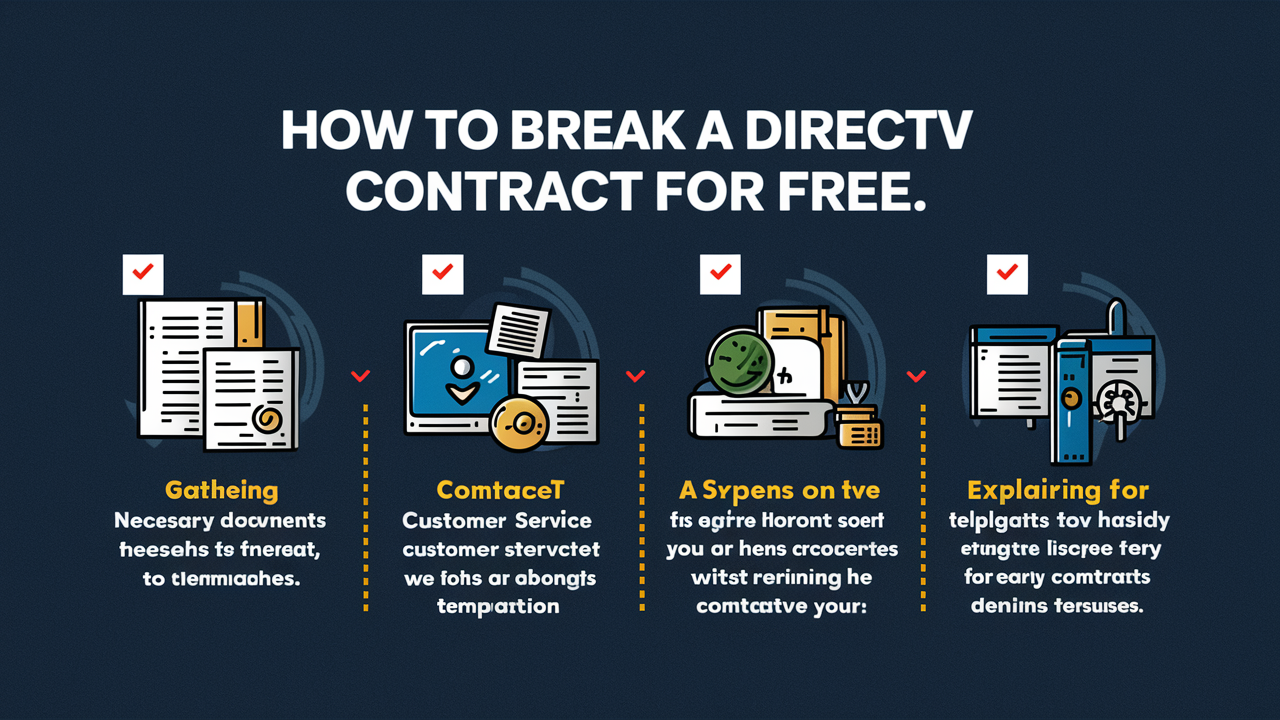
Seeking to terminate your DIRECTV service without incurring hefty early termination fees (ETFs)? This guide explores the nuances of breaking a DIRECTV contract for free. We delve into legitimate loopholes, common scenarios, and negotiation tactics to help you navigate this process effectively and avoid unexpected charges in 2025-26.
Understanding Your DIRECTV Contract
Before you can even think about breaking your DIRECTV contract, a thorough understanding of its terms and conditions is paramount. Most DIRECTV service agreements are structured with an initial commitment period, typically 12 or 24 months. During this period, if you choose to terminate service without a valid reason recognized by DIRECTV, you will be subject to an Early Termination Fee (ETF). These fees are designed to recoup the costs associated with installation, equipment, and promotional offers that were likely subsidized by your commitment. As of 2025, these ETFs can range from $15 to $20 per month remaining on your contract, potentially adding up to hundreds of dollars.
The Anatomy of an ETF
The Early Termination Fee isn't arbitrary. It's a calculated amount based on several factors:
- Remaining Contract Duration: The primary driver of the ETF is how many months are left until your contract naturally expires. The longer you have left, the higher the fee.
- Promotional Discounts: If you received significant discounts on equipment, installation, or monthly service during your contract term, DIRECTV often factors these back into the ETF calculation.
- Equipment Costs: While you typically rent equipment from DIRECTV, certain situations or agreements might involve upfront purchase costs that could be amortized or considered in the ETF.
Where to Find Your Contract Details
Locating your specific contract details is the first actionable step.
- Online Account: Log in to your DIRECTV online account. Your service agreement, including the commitment end date and ETF details, is usually accessible within the account management section.
- Welcome Kit/Emails: Review any physical or digital welcome kits you received when you signed up. These documents often contain a summary of your contract terms.
- Customer Service: If you cannot find the information online or in your documentation, contact DIRECTV customer service directly. Ask them to clarify your contract end date and the current ETF amount. Be prepared to provide your account information.
The Importance of the Commitment End Date
Your commitment end date is the golden ticket to avoiding an ETF. Once this date passes, you are generally free to cancel your service without penalty. It is crucial to mark this date on your calendar and plan your cancellation strategy accordingly. Many users aim to switch providers just before this date to ensure a seamless transition without incurring fees.
Terminating Without Penalty: Legitimate Avenues
While the standard contract imposes ETFs, DIRECTV, like most service providers, acknowledges certain circumstances that may warrant an early termination without penalty. Identifying if your situation falls into one of these categories is key to achieving your goal of breaking the contract for free. These exceptions are not always explicitly advertised but are often outlined in the fine print of your service agreement or are subject to company policy.
Relocation Outside of Service Area
One of the most common and accepted reasons for terminating a contract early without penalty is relocating to an area where DIRECTV service is not available.
- Verification Process: DIRECTV will likely require proof of your new address and confirmation that service is unavailable there. This might involve providing a utility bill, a lease agreement, or a letter from a new internet/cable provider in the area.
- Geographic Limitations: It's important to note that this typically applies to areas with no satellite or internet infrastructure capable of supporting DIRECTV. Moving within a region where DIRECTV is available, even if you choose not to use it, usually won't qualify.
- Documentation is Key: Gather all necessary documents beforehand to expedite the process.
Military Deployment or Permanent Change of Station (PCS)
The Servicemembers Civil Relief Act (SCRA) and similar military-focused policies provide significant protections for active-duty military personnel.
- Active Duty Orders: If you are being deployed overseas or are receiving Permanent Change of Station (PCS) orders that necessitate breaking your contract, DIRECTV is generally required to allow termination without an ETF.
- Required Documentation: You will need to provide official copies of your deployment orders or PCS orders.
- Notification: It's advisable to notify DIRECTV as soon as possible after receiving your orders, providing them with the necessary documentation.
Death of the Account Holder
In the unfortunate event of the account holder's death, DIRECTV typically waives early termination fees.
- Proof of Death: A death certificate will be required to process the cancellation.
- Authorized Representative: The individual responsible for settling the deceased's affairs (e.g., an executor of the estate) will need to provide relevant documentation and communicate with DIRECTV.
Significant Service Issues and Failure to Rectify
This is a more complex but potentially viable route. If DIRECTV consistently fails to provide the contracted service, and these issues cannot be resolved despite multiple attempts, you may have grounds to terminate without penalty.
- Documentation of Issues: This requires meticulous record-keeping. Log every instance of service disruption, poor quality, or technical failure. Note the dates, times, descriptions of the problem, and any troubleshooting steps taken.
- Customer Service Interactions: Keep records of all calls to customer service, including representative names, reference numbers, and the outcomes of each interaction.
- Formal Complaint: If issues persist, escalate your concerns formally. Send written complaints (certified mail is recommended) detailing the unresolved problems and referencing your previous attempts to resolve them.
- DIRECTV's Obligation: DIRECTV has an obligation to provide the service as advertised and agreed upon. If they repeatedly fail to do so and cannot offer a satisfactory resolution, you may be able to argue for a contract termination without penalty. This often requires persistent effort and strong documentation.
Moving to a Dormitory or Assisted Living Facility
Similar to relocation, moving into specific types of residences where satellite TV is impractical or unavailable can sometimes be a valid reason for early termination.
- Specific Facility Types: This often applies to college dormitories with provided cable services or assisted living facilities that have bundled entertainment packages.
- Verification: You may need to provide documentation from the facility confirming the situation.
Common Scenarios and Solutions
Beyond the universally accepted reasons, many subscribers find themselves in situations that aren't immediately obvious as penalty-free termination scenarios. Exploring these common predicaments and understanding how to approach them can significantly increase your chances of a favorable outcome. The key often lies in detailed documentation and strategic communication.
Moving to a New Home (Within Service Area)
This is a frequent sticking point. If you're moving to a new house or apartment within an area where DIRECTV is available, simply stating you're moving usually isn't enough to avoid the ETF.
- The "No Service Available" Clause: As mentioned, the primary exception is moving to an area *without* DIRECTV service. If your new location is serviceable, the contract generally still applies.
- Transferring Service: DIRECTV will typically offer to transfer your service to the new address. If you don't want to transfer, you'll likely face the ETF unless another exception applies.
- Negotiation Opportunity: In some cases, you might be able to negotiate a reduced ETF if you're a long-standing customer with a good payment history. This is not guaranteed but can be attempted.
Switching to a Competitor (Better Deal, More Features)
The allure of a cheaper package or a competitor's superior features is a strong motivator. However, this is rarely a valid reason for penalty-free termination.
- Contractual Obligation: Your contract is with DIRECTV. A competitor's offer doesn't nullify your agreement.
- Waiting Game: The most straightforward way to switch without penalty is to wait until your commitment period ends.
- Negotiating a Buyout: While not free, some users have reported success in negotiating a "buyout" of their contract with DIRECTV. This might involve paying a portion of the remaining ETF, often less than the full amount. This is a negotiation, not a right.
Financial Hardship or Job Loss
Experiencing financial difficulties can make paying for services challenging. While DIRECTV isn't obligated to waive ETFs for financial hardship, some flexibility might be possible.
- Be Honest and Prepared: Contact DIRECTV and explain your situation honestly. Be prepared to provide documentation if requested (e.g., layoff notice, proof of reduced income).
- Payment Plans or Reduced Service: Instead of outright cancellation, inquire about temporary payment plans, a suspension of service, or downgrading to a more affordable package.
- Compassionate Consideration: Some customer service representatives may have discretion to offer a reduced ETF or a payment arrangement as a gesture of goodwill, especially for long-term customers.
Dissatisfaction with Service Quality (Beyond Rectification)
This overlaps with the "Significant Service Issues" section but can also apply to ongoing, albeit less severe, dissatisfaction that DIRECTV has been unable to resolve to your satisfaction.
- Document Everything: As stressed before, meticulous documentation is crucial. Keep logs of all outages, pixelation, audio issues, or any other service degradations.
- Multiple Technician Visits: If multiple technicians have visited your home without resolving the core issues, this strengthens your case.
- Escalate to Supervisors: If front-line support cannot help, politely but firmly ask to speak with a supervisor or manager.
- Formal Written Complaint: A well-documented, written complaint detailing the persistent issues and failed resolution attempts is more impactful than verbal discussions.
Equipment Malfunctions or Incompatibility
If the DIRECTV equipment provided is consistently malfunctioning and cannot be repaired or replaced effectively, this could be a point of contention.
- Troubleshooting Records: Ensure you have followed all troubleshooting steps and that DIRECTV has attempted repairs or replacements.
- Defective Equipment: If the equipment itself is proven to be defective and replacement doesn't solve the problem, you might have grounds to argue that the service isn't being delivered as promised.
Table: Common Scenarios vs. Potential Solutions
Here's a quick overview of common situations and potential strategies:
| Scenario | Likelihood of Penalty-Free Termination | Primary Strategy |
|---|---|---|
| Relocation (No Service Available) | High | Provide Proof of Relocation & Unavailability |
| Military Deployment/PCS | Very High (Legal Protection) | Submit Official Orders |
| Death of Account Holder | Very High | Provide Death Certificate |
| Persistent Service Issues (Unresolved) | Moderate (Requires Strong Documentation) | Meticulous Logging & Escalation |
| Financial Hardship | Low (Negotiation-Based) | Honest Communication, Seek Payment Plans |
| Moving to New Home (Within Service Area) | Very Low | Wait for Contract End or Negotiate ETF |
| Switching to Competitor | Very Low | Wait for Contract End or Negotiate ETF |
Negotiating with DIRECTV
Even if your situation doesn't neatly fit into a penalty-free category, negotiation can be your most powerful tool. DIRECTV, like any large corporation, has policies and procedures, but there's often room for flexibility, especially with experienced customer service representatives or retention specialists. The goal is to present your case in a way that makes waiving or reducing the ETF the most logical and cost-effective solution for them, or at least a goodwill gesture.
When to Initiate Negotiation
Timing is crucial. Initiating negotiations too early might mean you haven't exhausted other options, while waiting too long might limit your leverage.
- Before Official Cancellation: The best time to negotiate is *before* you formally request to cancel your service. This positions you as a customer considering options, not someone who has already made up their mind.
- After Exhausting Other Options: If you've explored all the penalty-free avenues and found they don't apply, negotiation becomes the next logical step.
- When Facing Financial Hardship: If you're struggling to pay, approaching them proactively to discuss options can be more effective than waiting until you're behind on payments.
Who to Speak With
Not all customer service representatives are empowered to make significant concessions.
- Customer Retention Department: This department is specifically tasked with keeping customers. They often have more authority to offer discounts, waive fees, or negotiate terms than general customer service.
- Supervisors and Managers: If you're not getting anywhere with a standard representative, politely ask to speak with a supervisor. They may have broader discretion.
- Specialized Departments: For military personnel or those dealing with severe service issues, there might be specialized departments that handle these cases.
Crafting Your Negotiation Strategy
Approach the conversation strategically.
- Be Polite but Firm: Maintain a respectful tone, but be clear about your objectives. Avoid being aggressive or demanding, as this can be counterproductive.
- Highlight Your Value as a Customer: If you've been a loyal customer for a significant period, mention your tenure and consistent payment history. This shows you're not just a problematic account.
- Present Your Case Clearly: If you have a specific reason for wanting to leave (e.g., persistent service issues, financial hardship), present it concisely and with any supporting evidence you may have.
- Know Your Bottom Line: Decide in advance what outcome you're hoping for (e.g., full waiver, reduced ETF, payment plan).
- Be Prepared to Walk Away (and Return): Sometimes, indicating that you are prepared to cancel and face the ETF can prompt a better offer. You can always hang up and call back later if the initial offer isn't satisfactory.
- Ask About Promotions: Even if you're leaving, ask if there are any current promotions or offers that might make staying more appealing, or if any such offers could be applied to your ETF.
What to Negotiate For
Your negotiation shouldn't be limited to just the ETF.
- Full ETF Waiver: This is the ideal outcome.
- Reduced ETF: Negotiating a lower fee is a common success. For instance, offering to pay half the remaining ETF might be accepted.
- Payment Plan for ETF: If you can't pay the ETF upfront, ask if you can pay it in installments over a few months.
- Service Downgrade: If financial hardship is the issue, see if you can switch to a much cheaper package to ride out the contract term.
- Equipment Return Flexibility: Clarify the process and deadlines for returning equipment to avoid additional charges.
Example Negotiation Script Snippet (Financial Hardship)
"Hello, my name is [Your Name], and I'm calling about my DIRECTV account. I've been a customer for [Number] years, and I've always paid my bills on time. Unfortunately, due to [briefly explain situation, e.g., a recent layoff], I'm experiencing significant financial hardship and am finding it very difficult to afford my current service. I'm looking for options to reduce my monthly costs. My contract is up in [Number] months, and the ETF is [Amount]. Is there any possibility of waiving this fee, or perhaps setting up a payment plan for it, given my circumstances and loyalty as a customer?"
Example Negotiation Script Snippet (Service Issues)
"Hello, I'm calling to discuss my DIRECTV service. I've been experiencing persistent issues with [describe issue, e.g., pixelation and dropped channels] for the past [duration]. I have logged [Number] calls to support, and technicians have visited on [Dates]. Despite these efforts, the problem remains unresolved. I have documentation of all these issues. Because the service I'm receiving is not what was contracted for, and these problems cannot be fixed, I would like to request an early termination of my contract without penalty. If that's not possible, I'd like to discuss a significantly reduced ETF."
Alternatives to Breaking Your Contract
Sometimes, the desire to break a contract stems from a perceived need rather than an absolute one. Before committing to the potentially complex process of early termination, consider if alternative solutions can meet your needs without incurring fees. These alternatives can save you time, hassle, and money.
Downgrading Your Service Package
If your primary concern is the monthly cost, downgrading to a more affordable package might be the simplest solution.
- Reduced Channel Selection: You'll likely lose access to premium channels or a wider variety of sports and entertainment networks.
- Lower Monthly Bill: This directly addresses financial strain without breaking the contract.
- Maintaining Service: You continue to receive service, avoiding any potential ETFs.
- How to Do It: Contact DIRECTV customer service and express your desire to explore lower-tier packages that better fit your budget.
Pausing or Suspending Service
If you're going to be away for an extended period (e.g., a long vacation, temporary work assignment), suspending your service might be an option.
- Temporary Inactivity: DIRECTV may allow you to suspend service for a set period (e.g., 30, 60, or 90 days) without incurring full charges. You might still pay a small monthly fee for suspension.
- Equipment Retention: You'll typically need to leave your equipment in place.
- Check Eligibility: Not all accounts are eligible for service suspension, and there might be limits on how often or for how long you can do it.
Transferring Service to a New Address
As mentioned earlier, if you're moving, DIRECTV will offer to transfer your service.
- Seamless Transition: If you're happy with DIRECTV and your new location is serviceable, this is the easiest way to continue your service without interruption or penalty.
- Potential for New Promotions: Sometimes, transferring service can open up opportunities for new customer-like promotions.
- Confirm Serviceability: Always confirm that DIRECTV service is available at your new address before initiating the transfer.
Bundling with Other Services
While DIRECTV is primarily a satellite TV provider, they sometimes offer bundles with internet or mobile services through partnerships.
- Potential Discounts: Bundling can sometimes lead to overall cost savings compared to subscribing to services separately.
- Evaluate Needs: Only consider this if you actually need the other bundled services.
Selling or Transferring the Account (Rarely Possible)
In extremely rare cases, some service providers might allow account transfers, but this is highly uncommon for DIRECTV and usually involves a credit check and new contract for the transferee.
- Contractual Restrictions: Most contracts explicitly prohibit account transfers.
- DIRECTV Policy: It's unlikely DIRECTV permits this, but you could inquire.
Waiting Out the Contract
This is the most straightforward and guaranteed way to avoid ETFs.
- Mark Your Calendar: Know your contract end date and plan your transition for just before it.
- Consider the Cost of Waiting: Weigh the cost of staying with DIRECTV for the remaining contract period against the potential ETF you would pay to leave early. Sometimes, paying the ETF is financially equivalent or even better than continuing service.
Table: Alternatives to Breaking Your Contract
| Alternative | Pros | Cons | Best For |
|---|---|---|---|
| Downgrade Package | Lower monthly bill, no ETF | Fewer channels, potential loss of features | Budget-conscious customers |
| Suspend Service | Avoids full charges temporarily | Limited duration, may still have small fee, not always available | Customers away for extended periods |
| Transfer Service | No ETF, seamless transition | Only applicable if moving to a serviceable area | Customers relocating |
| Wait Out Contract | Guaranteed no ETF | Requires continued service payment | Customers with patience and budget |
Legal Considerations and Your Rights
Understanding your legal rights as a consumer is essential when dealing with service contracts. While DIRECTV's contract is legally binding, consumer protection laws and regulations exist to ensure fair practices. Awareness of these rights can empower you during negotiations and provide a basis for challenging unfair practices.
Consumer Protection Laws
Various federal and state laws govern telecommunications contracts.
- Truth in Billing: Providers must provide clear and accurate billing information. This includes clearly stating contract terms, ETFs, and any fees.
- Unfair or Deceptive Practices: Laws prohibit companies from engaging in deceptive advertising or unfair contract terms. If DIRECTV's practices are found to be deceptive, it could impact the enforceability of your contract.
- State-Specific Regulations: Many states have their own consumer protection agencies and laws that may offer additional protections beyond federal mandates. For example, some states may have caps on early termination fees.
The Role of the FCC and FTC
The Federal Communications Commission (FCC) and the Federal Trade Commission (FTC) play roles in overseeing telecommunications and consumer protection.
- FCC: Primarily regulates interstate and international communications by radio, television, wire, satellite, and cable. While they don't typically intervene in individual contract disputes, their regulations set standards for providers.
- FTC: Protects consumers from deceptive or unfair business practices. If you believe DIRECTV has engaged in such practices, you can file a complaint with the FTC.
Arbitration Clauses
Many service contracts, including those from DIRECTV, contain mandatory arbitration clauses.
- What it Means: This clause generally means that you agree to resolve any disputes with DIRECTV through binding arbitration rather than by filing a lawsuit in court or joining a class-action lawsuit.
- Impact on Disputes: Arbitration is often faster and less expensive than litigation, but it can also limit your options for recourse.
- Review Your Contract: Understand if your contract includes an arbitration clause and its specific terms.
When to Seek Professional Advice
In complex situations, or if you feel your rights are being violated, consulting with a legal professional is advisable.
- Consumer Protection Attorney: An attorney specializing in consumer law can advise you on your rights and options.
- Better Business Bureau (BBB): While not a legal entity, the BBB can mediate disputes and provides a platform for consumer reviews and complaints, which can sometimes prompt resolution.
- State Attorney General's Office: Your state's Attorney General's office often has a consumer protection division that can offer assistance or guidance.
Documenting Everything for Legal Protection
If your situation escalates to needing legal advice or involves formal complaints, thorough documentation is your strongest asset.
- Keep Copies: Retain copies of your contract, bills, all correspondence (emails, letters), and notes from phone calls.
- Record Dates and Times: Be precise with dates and times of service issues, customer service calls, and technician visits.
- Save Visual Evidence: If you experience persistent picture quality issues, take photos or videos if possible.
Understanding Your "Cooling-Off" Period (If Applicable)
Some jurisdictions or specific contract types may offer a "cooling-off" period shortly after signing a contract, during which you can cancel without penalty.
- Check Your State Laws: Research if your state mandates such a period for service contracts.
- DIRECTV Policy: While not always advertised, DIRECTV might have an internal policy for a limited grace period. It's worth inquiring about this within the first few days of signing up.
Making the Switch Smoothly
Once you've successfully navigated the process of terminating your DIRECTV contract without penalty, the next step is ensuring a smooth transition to your new service provider. This involves careful planning and execution to avoid service gaps or unexpected costs.
Choosing Your New Provider
Research and compare different providers based on your needs and budget.
- Service Types: Consider satellite (like DIRECTV), cable, fiber optic, or streaming services.
- Package Options: Look at channel lineups, internet speeds, and bundle deals.
- Contract Terms: Understand the commitment periods and ETFs of any new provider.
- Promotions: Take advantage of new customer offers, but read the fine print.
Returning DIRECTV Equipment
Properly returning your DIRECTV equipment is crucial to avoid additional charges.
- Follow Instructions: DIRECTV will provide instructions on how and where to return equipment (e.g., shipping labels, drop-off locations).
- Package Carefully: Ensure all components (receivers, remotes, power cords) are included and packaged securely.
- Get a Receipt: Always obtain a receipt or tracking number as proof of return.
- Return Promptly: Adhere to the specified return deadline to avoid unreturned equipment fees.
Scheduling New Service Installation
Coordinate the installation of your new service to minimize downtime.
- Advance Scheduling: Schedule your new service installation a few days after your DIRECTV service is officially disconnected, if possible.
- Confirm Installation Details: Double-check the date, time, and any preparation needed at your home.
- Consider Self-Installation Kits: Some providers offer self-installation kits for simpler setups, which can be faster.
Transferring Your Phone Number (If Applicable)
If you have DIRECTV Voice or are switching to a VoIP service, you may be able to port your existing phone number.
- Initiate Porting: Start the number porting process with your new provider *after* your DIRECTV service is disconnected, or as instructed by the new provider.
- Do Not Cancel First: Never cancel your old service before initiating the porting process, as you will lose your number.
Updating Billing Information
Remember to update any automatic payments or services linked to your old DIRECTV account.
- Online Accounts: Update payment methods for streaming services, online subscriptions, etc.
- Financial Institutions: If you had direct debits set up, ensure they are cancelled or updated.
Final Bill Review
Carefully review your final DIRECTV bill.
- Check for Accuracy: Ensure all charges are correct and that no unexpected ETFs or equipment fees have been applied.
- Dispute Errors: If you find any discrepancies, contact DIRECTV customer service immediately to dispute them.
Enjoying Your New Service
Once everything is set up, take the time to familiarize yourself with your new provider's platform and features. If you followed the steps diligently, you should have successfully transitioned without the financial burden of early termination fees.
Conclusion
Breaking a DIRECTV contract for free in 2025-26 is achievable, but it requires a strategic approach rooted in understanding your contract, identifying legitimate loopholes, and employing effective negotiation tactics. While direct cancellation without penalty is rare outside of specific circumstances like military deployment or relocation to an unserviceable area, persistent service issues, meticulously documented, can also provide leverage. Always prioritize understanding your contract's end date and explore alternatives like downgrading or waiting out the term before considering early termination. Remember that thorough documentation and polite, firm communication with DIRECTV customer service, particularly the retention department, are your most valuable assets. By arming yourself with knowledge and a clear plan, you can navigate the complexities of contract termination and transition to a new provider without incurring the often-substantial early termination fees.


